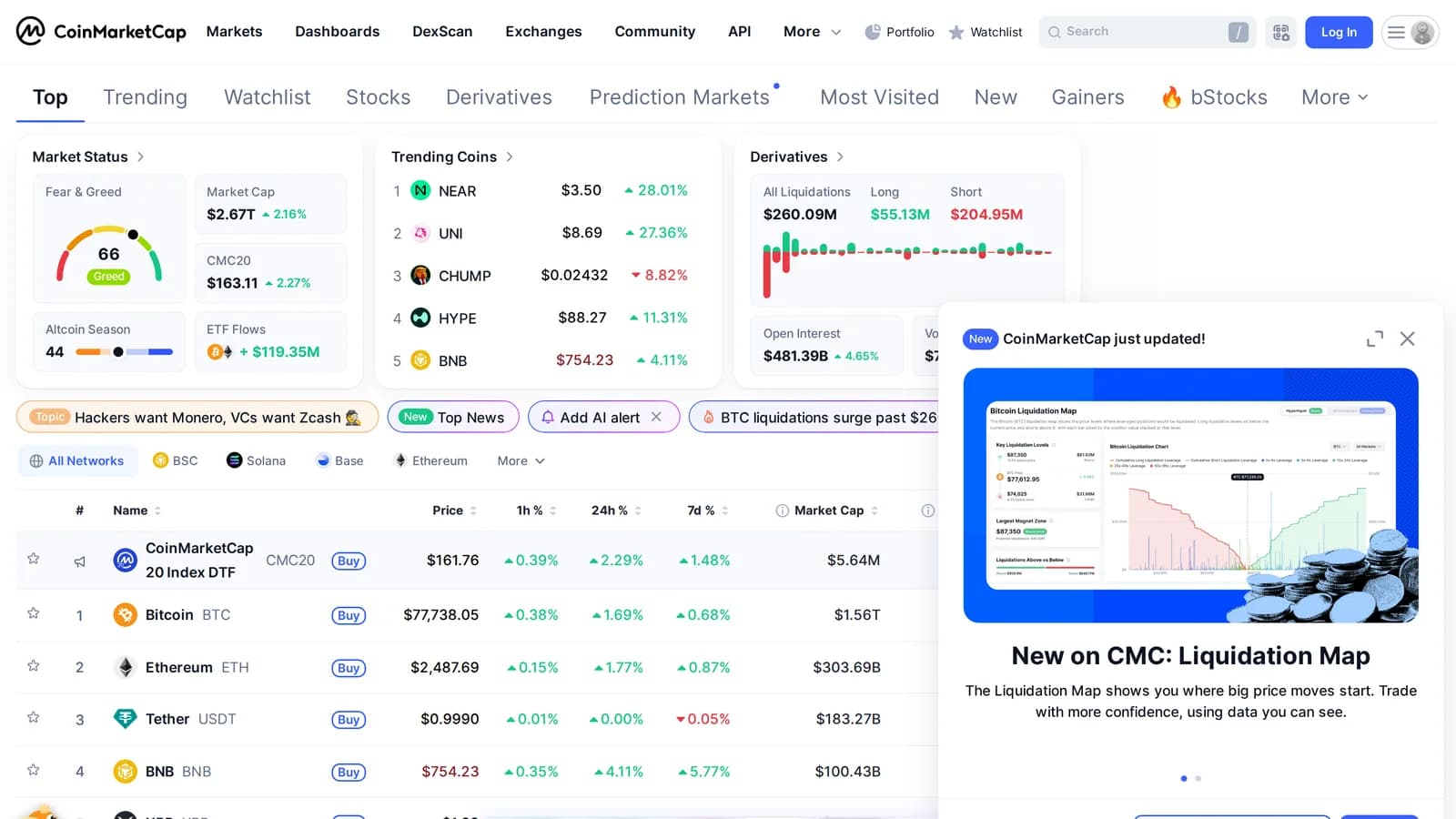
Verdict
Still the first place most people check a price, with the widest asset coverage and a usable free API. It has been owned by Binance since 2020, which is a conflict that should be stated on every page and is stated on none of them.
- Best for
- Quick price checks and broad asset coverage
- Cost
- Free; API from a free tier upwards
What works
- The widest asset coverage of any price aggregator
- Free API tier is generous enough for hobby projects and dashboards
- Historical data goes back further than almost any competitor's
- Exchange and DEX coverage is broad, including long-tail venues
What does not
- Owned by Binance, an exchange whose own markets it ranks
- Self-reported circulating supply figures distort market cap rankings
- Volume figures include venues with well-documented wash trading
- Listing and ranking methodology is less transparent than it should be
CoinMarketCap is where crypto prices became a public fact. For most of the last decade, if a token had a market capitalisation, it had one because this site calculated it, and the rankings on the front page have moved more capital than most research desks ever will.
Since 2020 it has been owned by Binance.
Why that matters even without a scandal
There is no public evidence of CoinMarketCap manipulating rankings in Binance's favour, and this review is not alleging any. The problem is structural rather than evidential.
The site ranks exchanges. It ranks tokens, including the platform token of its own parent company. It decides which venues count towards a reported volume figure and which are excluded as unreliable. Those are judgement calls, made by a subsidiary of a company with a direct commercial interest in the outcome, and the ownership is not disclosed on the pages where those judgements are presented as neutral data.
You do not need to prove a referee is biased to object to the referee being on the payroll of one of the teams.
Data quality
Circulating supply
Market cap is price multiplied by circulating supply, and circulating supply is frequently self-reported by the project. A team that excludes a large treasury allocation from its reported float gets a lower market cap and a higher apparent position in the rankings, which is a meaningful marketing advantage.
Cross-check the supply figure against the token contract or the project's own vesting documentation before treating any market cap as a meaningful number, particularly for recently launched tokens.
Volume
Reported volume aggregates venues of wildly different credibility. Wash trading on smaller exchanges has been documented repeatedly by multiple independent researchers, and it inflates the figures that feed the rankings. The site publishes confidence and liquidity metrics that partially address this, but the headline number is still the one everybody quotes and the one that appears in the ranking.
The API
The free API tier is genuinely generous — enough calls for a personal dashboard or a small project — and the documentation is good. Paid tiers scale to commercial use with clear limits.
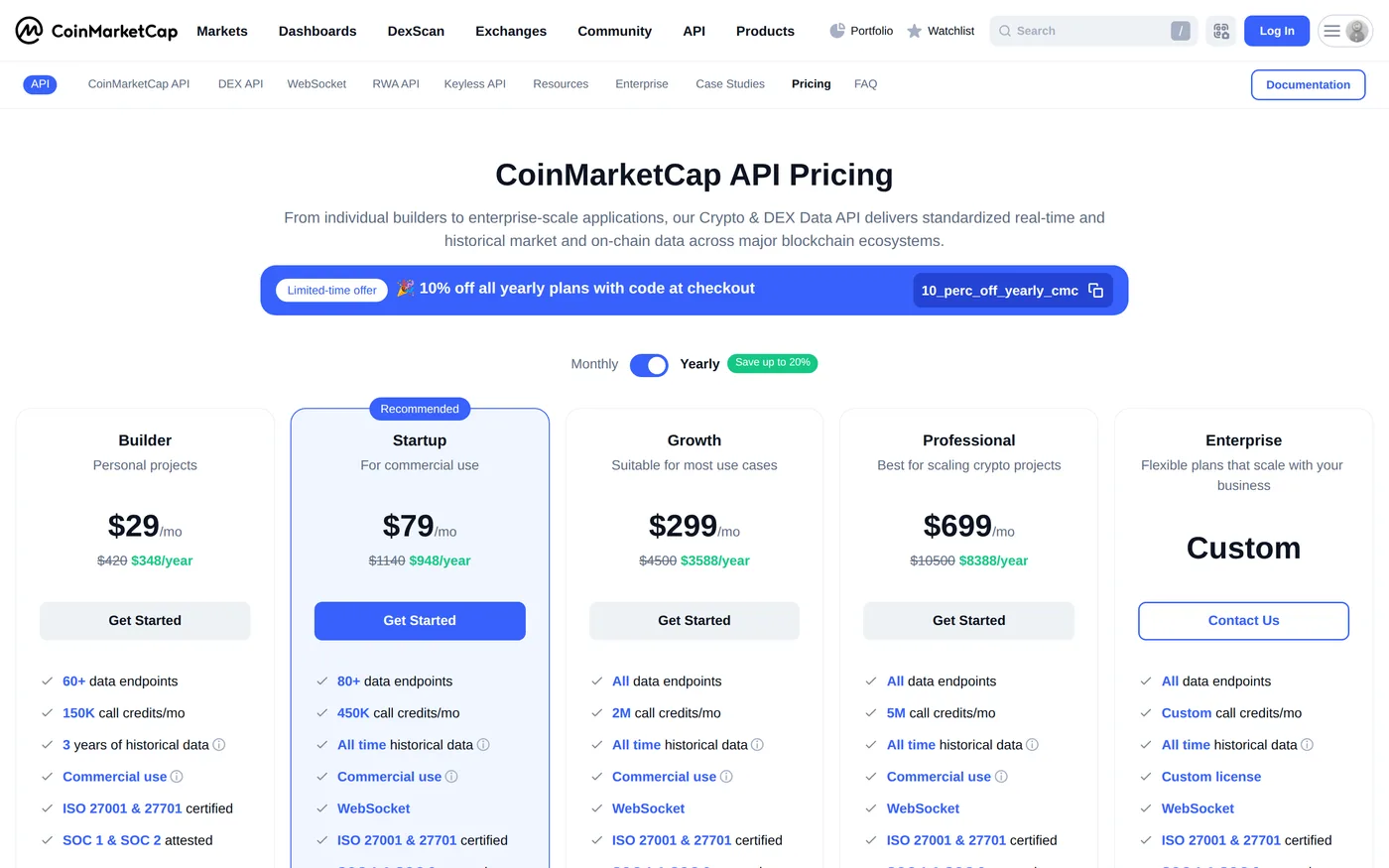
This is the part of the product with the fewest complaints attached to it.
The alternative
CoinGecko does substantially the same job without exchange ownership, and DefiLlama is better for anything on-chain. For a quick price check, CoinMarketCap is fine and the conflict never touches you. For research where a ranking or a volume figure is an input to a decision, use something structurally independent.
Verdict
The ranking is a product, not a measurement
Front-page position on this site has real consequences: it drives attention, attention drives buying, and buying drives the metric that determines position. Projects have optimised for it deliberately for years, and adjusting a reported circulating supply is the cheapest way to move up.
That feedback loop means the ranking measures visibility at least as much as it measures size. It was never designed to be an index and it has been treated as one by an entire industry, which is a problem the site inherited rather than created — but it is one a data provider with no competing interests would be better placed to fix.
What it is still the best at
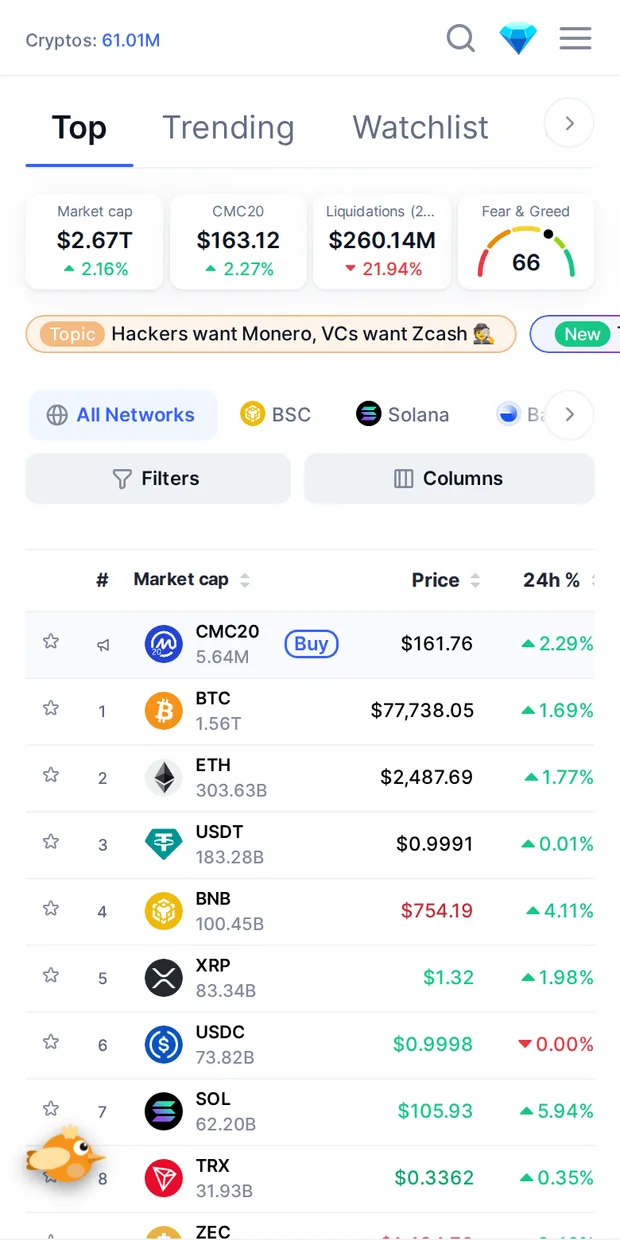
Coverage of the long tail. If a token trades anywhere, CoinMarketCap probably has a page for it, with a contract address, a chart and a list of venues. For the basic question of whether an asset exists and where it trades, nothing else is as complete.
The historical price archive is also genuinely valuable and goes back further than most competitors'. For anyone reconstructing a cost basis or checking what something was worth on a given date years ago, this is frequently the only public source.
How to use it without being misled
Use it for prices and contract addresses, not for rankings.
Treat any market cap involving a self-reported supply as an estimate, and check the fully diluted figure alongside it.
Ignore the exchange rankings entirely, or read them alongside an independent liquidity measure.
For anything on-chain — TVL, protocol revenue, yields — use a source that is not owned by an exchange.
Score: 6.9. Broad, fast, free and useful, with a governance structure no traditional financial data provider would be permitted to have, and two data-quality problems the industry has simply learned to live with.