Verdict
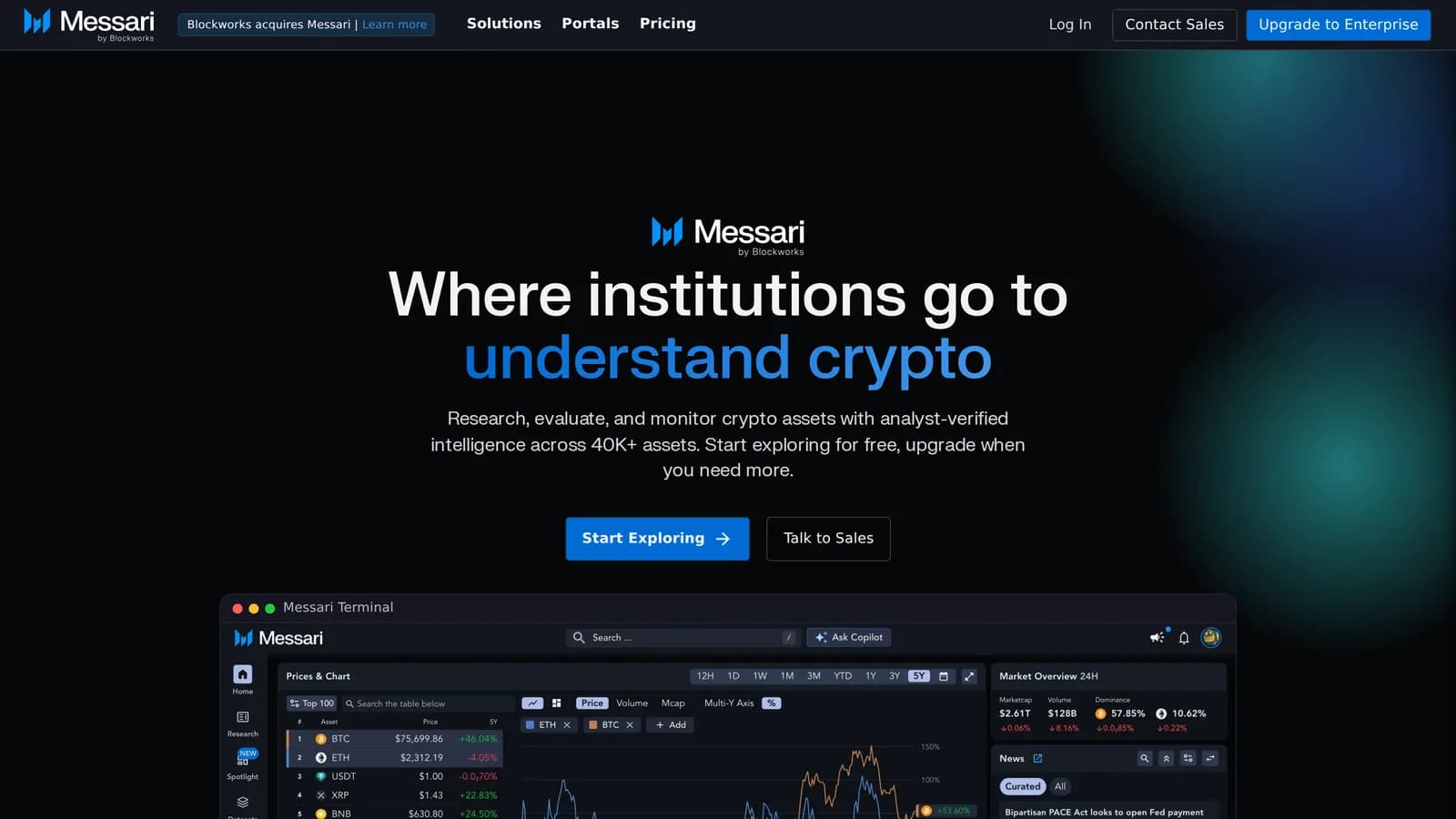
Structured protocol research, token unlock schedules and governance tracking in one place, aimed at people who write investment memos rather than trade charts. The free tier is a sample; the value is behind the subscription.
- Best for
- Protocol due diligence and unlock tracking
- Cost
- Free tier; Pro in the low tens of dollars monthly
What works
- Token unlock and vesting schedules are the best-organised anywhere
- Protocol reports follow a consistent structure, so comparisons are possible
- Governance proposal tracking across many DAOs in one feed
- Data methodology is documented rather than asserted
What does not
- Most of the useful depth is behind the paid tier
- Coverage is deep on large protocols and thin on the long tail
- Some research is produced in collaboration with the protocols covered
- Enterprise pricing is opaque and quoted on request
Crypto produces enormous quantities of information and almost no structured research. Messari's business is converting the first into the second: protocol reports with consistent sections, standardised metrics, documented methodology and citations that survive being pasted into a memo somebody else will challenge.
Unlock schedules are the killer feature
Token vesting is the single most reliably ignored input in crypto valuation. A protocol with a $200 million market cap and 40% of supply unlocking to insiders over eighteen months is a fundamentally different asset from one with the same market cap and no overhang, and that difference is rarely reflected in the price until the first cliff arrives.
Messari tracks these schedules in a form that makes cliff dates visible in advance and comparable across protocols. That is worth the subscription on its own for anyone holding early-stage tokens, and it is information that is technically public and practically inaccessible without this kind of work.
Governance tracking
Proposals across major DAOs are aggregated with summaries and outcomes. For anyone holding governance tokens, this replaces the job of monitoring a dozen forums, and it surfaces the treasury and emissions decisions that actually move a protocol's economics — which are rarely the proposals that get attention on social media.
What the free tier gives you
Prices, basic asset profiles, some screeners, a limited set of charts. Enough to know what the product looks like and not enough to use it for work.
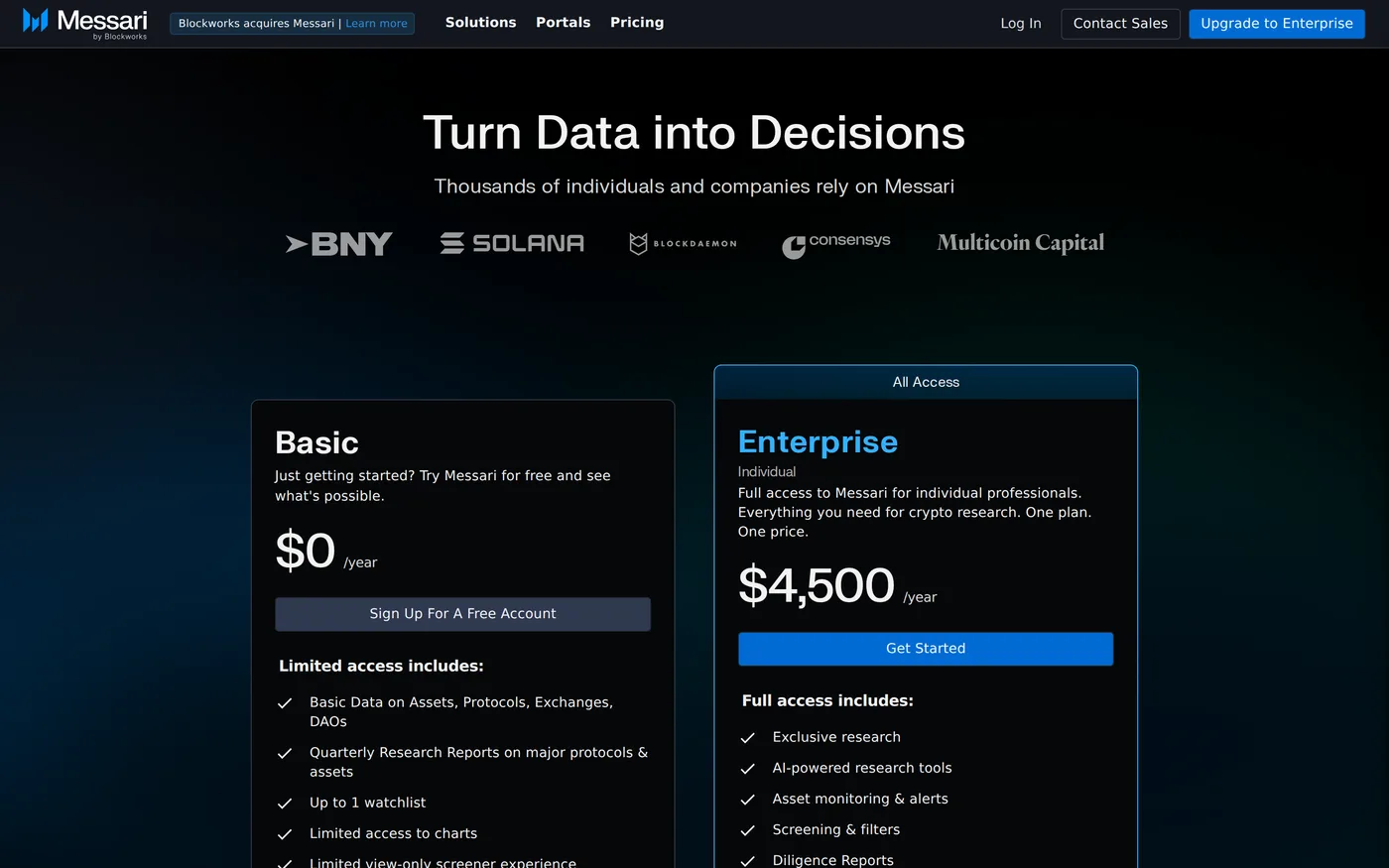
The Pro tier sits in the low tens of dollars per month and unlocks the research library, deeper data and export. Enterprise pricing is quoted on request, which in practice means it is aimed at organisations with a data budget.
The sponsored research question
Some protocol research in this category is produced in collaboration with, or funded by, the protocol being covered. Messari labels these arrangements, and the disclosure is more consistent than most competitors manage.
Read labelled research as informed and interested. A commissioned report is usually excellent for understanding how a protocol works mechanically and unreliable for whether you should own its token. Use the tables and ignore the framing.
Commissioned research is a good source of facts and a bad source of conclusions. The facts are checked; the emphasis is paid for.
Where the coverage runs out
Depth on major protocols is excellent. Below the top few hundred assets it thins quickly, and for a genuinely obscure protocol you will end up reading the contracts and the Discord yourself regardless of what you paid.
Who should pay for it
Anyone whose position sizes justify diligence work rather than vibes.
Holders of governance tokens who need to track proposals without living in forums.
Anyone writing something that has to be defensible to a third party — an investment committee, a client, a co-founder.
The standardised metrics
Messari applies consistent definitions across protocols — what counts as revenue, what counts as an active user, how supply is measured. That consistency is the point: two protocols described by their own teams are not comparable, and two protocols described by the same framework are.
The definitions are contestable and published, which is the right combination. You can disagree with a choice and see exactly what was chosen, rather than discovering a methodology difference three weeks into a comparison.
The unlock calendar in practice
A cliff unlock does not usually cause a crash on the day. It causes a slow bleed in the weeks before, as anybody who can see the calendar positions ahead of it, and then a period of absorption afterwards. The date is public; the positioning around it is the tradeable part, and it starts earlier than most holders expect.
Knowing the schedule does not tell you what to do. It does tell you whether the thing you are looking at is a token with a genuine float or a token where most of the supply has not arrived yet, and those deserve completely different position sizes.
What it will not do for you
It will not tell you what to buy, and it does not pretend to. The reports describe mechanisms, economics, risks and governance; the investment conclusion is left to the reader, which is both intellectually honest and the reason some subscribers feel underserved.
It also will not substitute for reading a protocol's own documentation and contracts when you are taking a meaningful position. Research at this level is a starting point for diligence, not a replacement for it, and any product that positioned itself as the latter would deserve less trust rather than more.
Score: 7.7. The most professional research product in crypto, priced for professionals, withthe methodological honesty the category badly needs. The free tier is not where the value is, and the site does not pretend otherwise.